


R-410A vs R-22 Refrigerant: Complete Comparison Guide for HVAC Technicians

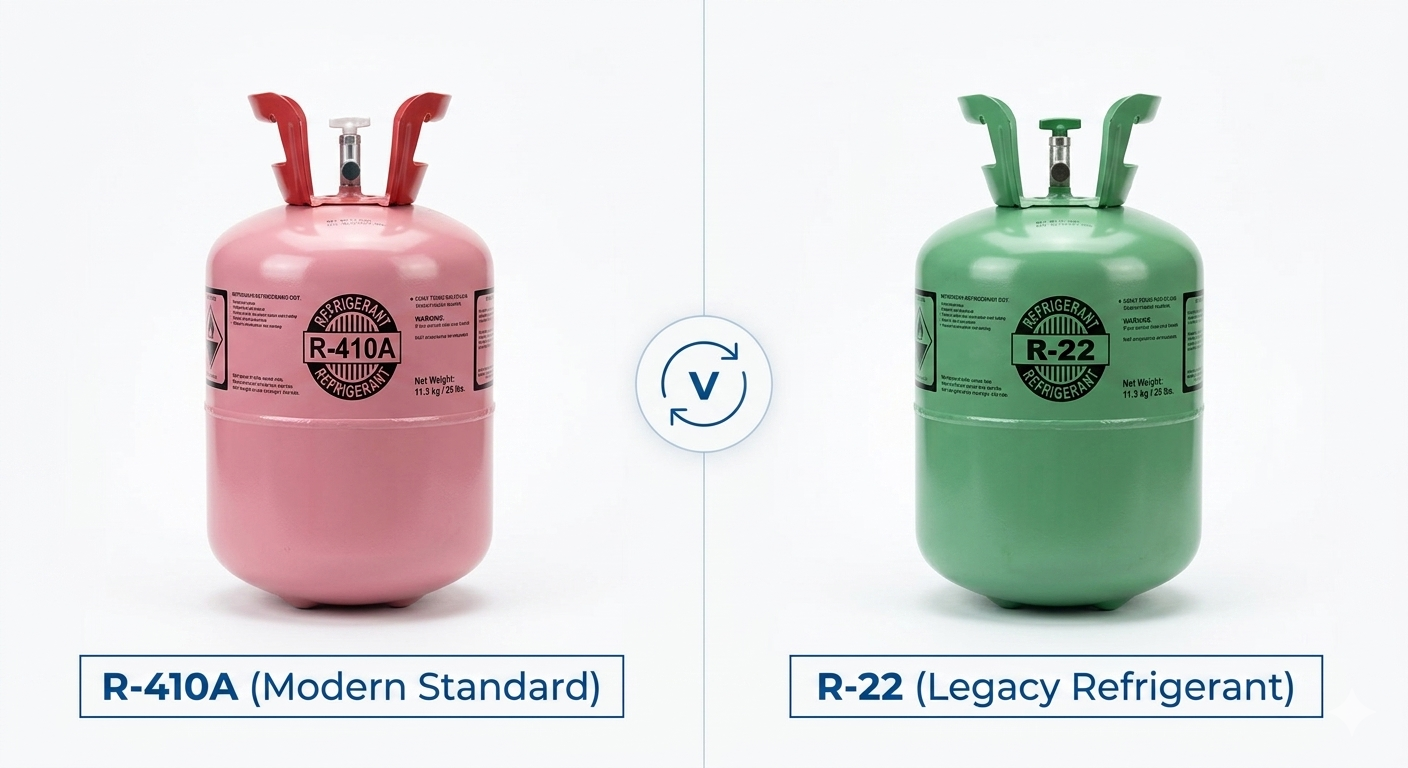
Compare R-410A and R-22 refrigerants: Learn key differences, EPA regulations, pressure requirements, costs, and why R-410A is replacing R-22 in HVAC systems. Expert guide from igvagas.
Introduction
The HVAC industry is undergoing a significant transformation. R-22 (Freon) has been phased out, and R-410A has become the dominant replacement refrigerant. But understanding the differences between these two refrigerants is critical for HVAC technicians, contractors, and facility managers.
Which refrigerant do you actually need? What does the phase-out mean for your existing systems? And how do you make the right choice for repair versus replacement? This comprehensive guide from igvagas covers everything you need to know about R-410A vs R-22 refrigerants.
Key Differences at a Glance
| Property | R-22 (HCFC-22) | R-410A (HFC-410A) |
| Chemical Family | HCFC | HFC Blend |
| GWP (Global Warming Potential) | 1,810 | 2,088 |
| Normal Boiling Point | -40.8°F | -61.9°F |
| Critical Pressure | 722 psi | 723 psi |
| Operating Pressure (Typical) | 130–180 psi (low) | 200–420 psi (low-high) |
| Ozone Depletion Potential (ODP) | 0.055 (Yes) | 0 (None) |
| EPA Status | Phase-out Complete | Currently Active |
| Compressor Oil Required | Mineral or Alkylbenzene | POE Oil (Polyolester) |
| System Retrofit Possible | N/A | No direct drop-in |
| Availability | Limited (Reclaimed Only) | Widely Available |
Understanding R-22: The Phase-Out
R-22, commonly known as Freon, was the standard refrigerant for decades in residential and commercial HVAC systems. However, it contains chlorine, which contributes to ozone layer depletion. This is why the EPA implemented a complete phase-out.
R-22 Phase-Out Timeline
•January 1, 2010: Production and import of R-22 limited to 90% of baseline levels
•January 1, 2015: Further reduction to 50% of baseline
•January 1, 2020: Production and import of R-22 completely banned in the United States
What this means: No new R-22 is being manufactured. The only R-22 available today is reclaimed or stockpiled inventory from before the ban. This severely limits supply and drives prices upward.
Can You Still Use R-22?
Yes, but with important restrictions:
•R-22 can still be used to service existing R-22 systems
•Only EPA 608 Type II or Universal certified technicians can purchase and handle R-22
•All refrigerant must be properly recovered—venting is a federal violation
•Prices continue to rise as supply dwindles
Understanding R-410A: The Modern Standard
R-410A is an HFC blend composed of 50% R-32 and 50% R-125. It was developed as a replacement for R-22 and has become the standard refrigerant for new HVAC installations since the early 2000s.
Why R-410A?
1.Zero Ozone Depletion: R-410A contains no chlorine and poses no threat to the ozone layer
2.Better Efficiency: Higher pressure operation allows for more efficient heat transfer
3.Improved Cooling Capacity: Delivers superior cooling performance compared to R-22
4.Widely Available: Abundant supply from multiple manufacturers keeps prices stable and competitive
5.Regulatory Compliance: Meets current EPA standards and future environmental requirements
Critical Difference: Operating Pressure
This is the most important distinction between R-410A and R-22.
R-410A operates at approximately 60–70% higher pressures than R-22. This fundamental difference means:
•R-22 Systems: Operate at 130–180 psi (low pressure)
•R-410A Systems: Operate at 200–420 psi (high pressure)
Why This Matters
A system designed for R-22 cannot be simply recharged with R-410A. The components are not engineered for higher pressures:
•Compressor: Rated for lower pressures; higher pressure can cause failure
•Refrigerant Lines: May rupture under R-410A pressure
•Condenser and Evaporator Coils: Not designed for higher operating pressures
•Metering Devices: Calibrated for R-22 flow rates and pressures
Safety Warning
Never attempt to charge an R-22 system with R-410A. This can result in:
•Ruptured refrigerant lines
•Compressor failure and system breakdown
•Safety hazards including refrigerant leaks
•Voided warranties and potential liability
Always verify the nameplate refrigerant type before any service work.
Pressure and System Compatibility Explained
Why the Pressure Difference?
The pressure difference stems from the thermodynamic properties of each refrigerant:
•R-22 has a lower saturation pressure at given temperatures
•R-410A has a higher saturation pressure due to its blend composition
This means R-410A transfers heat more efficiently but requires robust system components.
Component Requirements for R-410A
Systems designed for R-410A feature:
1.Heavy-duty compressors rated for high-pressure operation
2.Reinforced refrigerant lines with higher pressure ratings
3.POE (Polyolester) compressor oil instead of mineral oil (R-22 uses mineral or alkylbenzene oil)
4.High-pressure rated metering devices and expansion valves
5.Desiccant filters to protect against moisture contamination
EPA Regulations: What You Must Know
R-22 Regulations
•Production/Import Ban: Complete as of January 1, 2020
•Certification Required: EPA 608 Type II or Universal certification needed to purchase R-22
•Service Use Allowed: Existing R-22 systems can still be serviced
•Recovery Mandatory: All refrigerant must be recovered; venting is a federal violation
•Penalties: Fines up to $37,500 per violation for improper handling
R-410A Regulations
•Currently Active: R-410A is approved for new installations
•AIM Act Watch: The American Innovation and Manufacturing Act is tracking R-410A for potential future phase-down
•EPA 608 Certification: Required to handle R-410A
•Recovery Requirements: Same as R-22—all refrigerant must be recovered
•Future Outlook: Expect gradual phase-down toward lower-GWP alternatives (R-32, R-454B, R-1234yf)
Venting Violations
Venting any refrigerant into the atmosphere is a federal crime under the Clean Air Act. Penalties include:
•Fines up to $37,500 per violation
•Criminal prosecution for willful violations
•Loss of EPA certification
Cost Comparison: R-410A vs R-22
R-22 Pricing
Because R-22 supply is finite (reclaimed only), pricing is volatile and trends upward:
•Single Cylinder (30 lb): $400–$600+ per cylinder
•Bulk Pallet Orders: $350–$500+ per cylinder
•Trend: Prices continue to rise as supply contracts
R-410A Pricing
R-410A is widely available and significantly cheaper:
•Single Cylinder (25 lb): $100–$250 per cylinder
•Bulk Pallet Orders: $80–$150 per cylinder
•Trend: Prices remain stable due to abundant supply
Cost Impact on Service Decisions
For HVAC contractors servicing legacy R-22 systems, this cost difference is a major factor:
Scenario 1: Minor R-22 Leak
•Cost to repair and recharge: $400–$800 (R-22 expensive)
•Customer may accept higher service cost for familiar system
Scenario 2: Major R-22 Leak or System Failure
•Cost to repair and recharge: $1,500–$3,000+
•Full system replacement with R-410A: $3,500–$8,000
•Payback period: 5–10 years through improved efficiency
Should You Retrofit an R-22 System?
The Retrofit Question
There is no direct drop-in replacement for R-22 that requires zero system modifications. However, several retrofit options exist:
Common R-22 Retrofit Refrigerants
| Refrigerant | Compatibility | Oil Change Required | Efficiency Loss | Notes |
| R-421A | Good | Recommended | 2–5% | Most common retrofit |
| R-422D | Good | Recommended | 3–7% | Better cooling capacity |
| R-422B | Fair | Recommended | 5–10% | Less common |
| R-427A | Fair | Recommended | 5–12% | Limited availability |
Retrofit Considerations
Advantages:
•Avoids full system replacement cost
•Extends equipment life 3–5 years
•Maintains existing ductwork and installation
Disadvantages:
•Efficiency loss of 2–12% compared to original R-22 performance
•Oil flush typically required ($200–$500)
•May not be approved by original equipment manufacturer
•Warranty implications
•Temporary solution—eventual replacement still needed
Repair vs. Replacement Decision Tree
Replace the System If:
•Equipment is older than 10–12 years
•Compressor failure or major leak
•Multiple repairs needed in past 2 years
•SEER rating below 13 (older systems)
•Customer plans to stay in home/building 5+ more years
Repair/Retrofit If:
•Equipment is newer (less than 8 years old)
•Minor leak in accessible location
•First major repair needed
•Customer plans short-term occupancy
•Budget constraints
Buying R-22 Today: What to Know
Purchasing Requirements
1.EPA Certification: You must hold valid EPA 608 Type II or Universal certification
2.Verification: Always verify reclaimed R-22 meets ARI-700 purity standards
3.Supplier Selection: Buy from certified, reputable suppliers like igvagas
4.Documentation: Keep records of all R-22 purchases and usage
Quality Assurance
Not all reclaimed R-22 meets industry standards. When purchasing:
•Verify ARI-700 Certification: Confirms purity and quality
•Check Cylinder Condition: Look for damage, rust, or contamination
•Confirm Reclamation Date: Older reclaimed stock may have degraded
•Request Documentation: Reputable suppliers provide certification papers
igvagas R-22 Advantage
At igvagas, we provide:
•✅ Factory-sealed or certified-reclaimed R-22
•✅ ARI-700 purity certified
•✅ Ships from US warehouses
•✅ Fast delivery for urgent jobs
•✅ Bulk pricing available
•✅ Expert technical support
Seasonal Availability
Buy ahead of the cooling season. Late spring and summer demand spikes, which can:
•Tighten availability
•Increase prices
•Delay delivery times
Plan ahead for peak season jobs.
R-410A: The Future of HVAC Refrigeration
Why R-410A Dominates New Installations
1.Regulatory Compliance: Meets all current EPA standards
2.Superior Efficiency: 10–15% more efficient than R-22
3.Better Cooling: Higher heat transfer capacity
4.Abundant Supply: Widely available from multiple manufacturers
5.Stable Pricing: Competitive market keeps costs reasonable
6.Long-Term Viability: Will remain standard for 10–15+ years
The Next Generation: Low-GWP Refrigerants
While R-410A is currently standard, the HVAC industry is already transitioning to lower-GWP alternatives:
•R-32: Lower GWP, higher efficiency, increasingly common
•R-454B: Drop-in R-410A replacement with 66% lower GWP
•R-1234yf: Ultra-low GWP, automotive and light commercial use
•R-1234ze: Commercial refrigeration alternative
These will gradually replace R-410A over the next decade.
Practical Recommendations for HVAC Professionals
For System Maintenance
1.Always verify refrigerant type on the nameplate before servicing
2.Use correct gauges for the refrigerant type (color-coded)
3.Recover all refrigerant properly—never vent
4.Maintain EPA 608 certification and stay current on regulations
5.Keep detailed records of all service work and refrigerant usage
For Customer Conversations
When R-22 System Needs Service:
•Explain the phase-out and limited supply
•Discuss rising R-22 costs
•Present repair vs. replacement options
•Recommend R-410A system replacement for long-term savings
•Highlight efficiency improvements (lower utility bills)
When Recommending R-410A:
•Emphasize regulatory compliance
•Highlight 10–15% efficiency improvement
•Calculate long-term cost savings
•Discuss environmental benefits
•Mention warranty and reliability
Bottom Line: R-410A vs R-22
Key Takeaways
1.R-22 is phased out: No new production; only reclaimed supply remains
2.R-410A is the standard: New installations use R-410A exclusively
3.Never mix them: Different pressures make retrofitting impossible
4.Costs differ significantly: R-410A is 50–60% cheaper than R-22
5.Repair vs. replace: Evaluate system age and repair history
6.Regulations matter: EPA 608 certification required; venting is illegal
7.Future is low-GWP: Expect gradual transition to R-32, R-454B, and alternatives
When to Use Each
Use R-22 Only If:
•Servicing existing R-22 systems
•Customer cannot afford replacement
•System is relatively new and repair is cost-effective
•Certified to handle and purchase R-22
Use R-410A If:
•Installing new systems
•Replacing failed R-22 equipment
•Customer wants long-term reliability
•Planning for 15+ year system lifespan
Need Professional-Grade Refrigerants?
At igvagas, we supply both R-22 and R-410A refrigerants for HVAC professionals:
•✅ Factory-sealed cylinders with certified purity
•✅ Single cylinders and bulk pallet orders
•✅ Free freight on pallet orders
•✅ EPA 608/609 certified technicians only
•✅ Fast shipping from US warehouses
•✅ Expert technical support
Shop R-410A Refrigerants | Shop R-22 Refrigerants | Get Bulk Pricing
Frequently Asked Questions
Can I use R-410A in an R-22 system?
No. R-410A operates at 60–70% higher pressures. Using it in an R-22 system will damage components and create safety hazards.
Is R-22 still legal to use?
Yes, R-22 can still be used to service existing R-22 systems. Only new production and import are banned. You must be EPA 608 certified.
How long will R-22 remain available?
Supply is limited to reclaimed inventory. Availability will continue to decline, and prices will continue to rise.
What’s the best retrofit refrigerant for R-22?
R-421A and R-422D are the most common retrofits. Both require oil flush and will have 2–10% efficiency loss.
Will R-410A be phased out?
Possibly. The AIM Act is tracking R-410A for potential future phase-down. Lower-GWP alternatives like R-32 and R-454B are already being adopted.
How much does R-410A cost compared to R-22?
R-410A typically costs 50–60% less than R-22. A 25 lb R-410A cylinder costs $100–$250, while R-22 costs $400–$600+.
Do I need EPA certification to buy R-410A?
Yes. EPA 608 certification (Type II or Universal) is required to purchase and handle R-410A.
What’s the difference between reclaimed and virgin R-22?
Virgin R-22 is no longer available (production banned). Reclaimed R-22 is recovered from old systems and reprocessed to ARI-700 standards. Quality varies by supplier.
Related Articles
•R-134a Refrigerant: Complete Guide for HVAC and Automotive Use
•R-1234yf Refrigerant: The Complete Guide for Automotive AC Systems
•EPA 608 Certification: What HVAC Technicians Need to Know
•Low-GWP Refrigerants: The Future of HVAC and Commercial Refrigeration
Author: igvagas Technical Team | HVAC Refrigerant Specialists
Published: [Current Date]
Read Time: 12 minutes
Category: HVAC Guides